Why Does Your Shower Weaken When the Toilet Flushes?
A shower that weakens as the toilet refills usually points to a pressure drop or a supply line that cannot serve both fixtures well. A quick change can reveal a persistent restriction.
-
Shared demand: The toilet’s fill valve draws water while the shower is running, exposing limited supply capacity.
-
A wider pattern: If other fixtures also falter, the cause may affect more than the shower branch.
-
A useful comparison: Notice whether the stream recovers when the toilet tank finishes filling; that timing helps narrow the diagnosis.
For homeowners near Blennerhassett Island Historical State Park, a pressure check can distinguish a fixture issue from a broader supply problem before repairs are proposed. Green Bank Observatory’s precise measurements offer a fitting reminder: readings are more useful than guesswork, so record what happens during a flush. If you live near Point Pleasant Riverfront Park, note whether the symptom occurs at one shower or throughout the home; that detail helps us plan the inspection.
What causes a shower pressure drop during a flush?
When a toilet refills, water moves through the home’s supply piping at the same time shower water is flowing. If the supply is restricted, a valve is partly closed, or the system has limited capacity, the shower may lose force until the toilet finishes filling. That brief dip can be normal in some homes; a strong or lasting change deserves investigation.
We compare pressure with fixtures idle and while water is running. The difference matters: a normal idle reading does not rule out a restriction that shows up under demand.
In older brick homes and historic buildings, pipe condition and past alterations can affect how water reaches fixtures. Around the West Virginia State Capitol, changing seasons and older plumbing can make careful diagnosis more useful than guessing at a single cause.
We test first, explain the likely cause in plain language, and confirm the repair scope before work begins.
Could Wheeling weather make the symptom worse?
A weak shower that gets noticeably worse after a toilet flush can reflect a system already operating near its limit. In West Virginia, ice storms can disrupt power and water service; for homes using a well pump, an outage may change water availability and complicate symptom checks. Do not assume a brief outage explains a recurring pressure drop after service returns.
Summer thunderstorms can also cause outages affecting well pumps, so note whether the problem began during or after a storm. At higher elevations near Snowshoe Mountain Resort, winter conditions may add practical access challenges when service equipment is outdoors.
Around the Wheeling Suspension Bridge, homeowners can use the same straightforward observation anywhere in the state: record whether the shower recovers as soon as the toilet tank fills. Autumn temperature swings increase freeze-prevention needs, so inspect exposed plumbing safely and arrange help if you find a leak or damaged pipe. We serve statewide and coordinate visits with access conditions in mind.
When should you call instead of trying a DIY fix?
You can check whether the showerhead is visibly clogged, confirm that an accessible fixture valve is fully open, and compare the shower with another tap. Stop there if the pressure problem affects several fixtures, returns repeatedly, or comes with pump cycling, leaks, or unusual pipe noise. Do not adjust a pressure switch or well equipment without the right knowledge; a mistaken setting can affect system operation.
A useful next step is to note which fixtures are affected and when the pressure changes. Our crew has spent more than 10 years serving West Virginia, and we use those observations to guide testing rather than swap parts without evidence. If a kitchen faucet barely fills pots as well, that points toward a broader issue; our article on why a kitchen faucet barely fills pots in Charleston describes another symptom to compare.
What does a pressure inspection establish?
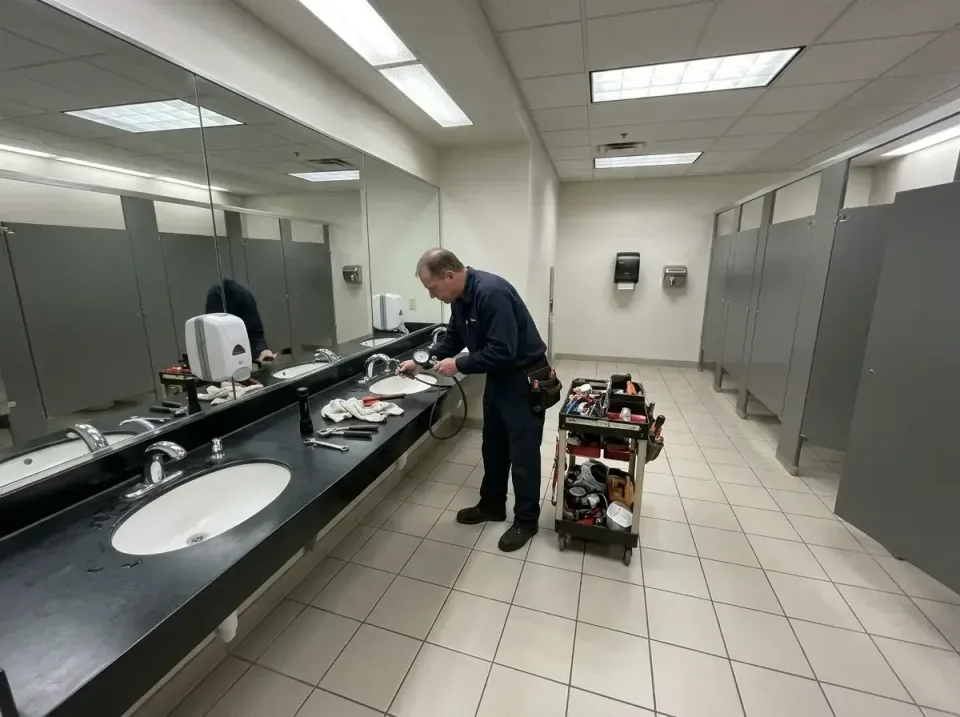
A technician can test pressure at a hose bib and compare readings with fixtures closed and with water flowing. That helps show whether the drop occurs throughout the system or is limited to a fixture or branch.
We also ask what happens during a toilet refill and whether laundry or another faucet causes a similar change. Those checks help separate a supply restriction from a showerhead issue.
The inspection should come before a repair recommendation. If measurements point to a regulator or another system component, we explain the finding and proposed scope before starting. A West Virginia plumbing permit may apply to some work; requirements should be confirmed with the appropriate building department.
Which Pressure Repair Fits a Weak Shower?
The right repair depends on whether the pressure drop is limited to the shower, affects the whole home, or involves a private well. The readings point the way.
Kanawha State Forest is a useful local reference for understanding that service needs can differ across the region; the repair still depends on measurements at the home. Heavy rain can raise sediment in private wells, so a well-fed house may need checks beyond the shower fixture.
Mountain elevations often receive heavier snowfall, which can make access to outdoor equipment a factor in planning. Municipal site coordination may also be needed where work involves coordination with a public water provider or affected site. Each option below addresses a different likely cause.
| Option | Best for | Key detail |
|---|---|---|
| Shower pressure repair | One shower loses force during a flush | Compare shower flow before and during toilet refill |
| Whole-house pressure repair | Several fixtures weaken together | Residential water pressure is commonly 40–80 psi |
| Regulator repair | City-water pressure control is suspect | Check regulator operation and system readings |
| Well pressure tank repair | Well system pressure changes under demand | Switch settings may be 20/40 or 30/50 psi |
How to Prepare for a Shower Pressure Check
A little preparation helps us reproduce the pressure drop and inspect the right equipment. Keep well controls for the technician; do not open electrical enclosures or adjust settings yourself.
-
Track the symptom: Run the shower and flush once, noting how long the pressure drop lasts.
-
Compare fixtures: Record whether another tap also weakens during the toilet refill.
-
Clear the work area: Make the pressure regulator or well pressure tank accessible without moving heavy equipment.
-
Check outdoor access: Freeze-thaw cycles stress exposed plumbing and foundations, so mention visible damage rather than attempting a risky inspection.
-
Share local conditions: If your home is near New River Gorge National Park and Preserve, Palace of Gold, or Prickett’s Fort State Park, tell us about access constraints; hilly terrain can affect equipment access and visit planning.
-
Discuss the findings: Drought periods can reduce private well yield, so mention recent changes in well output before we evaluate whether a booster system is appropriate.
Get a Clear Answer About Your Weak Shower
A shower that dips only while the toilet refills may have a simple fixture-level cause, but repeated or whole-home pressure loss calls for testing. A common residential target is 40–60 psi; a reading alone is not enough unless it is checked under the conditions that trigger the problem.
Summer humidity contributes to basement condensation, so keep dampness and plumbing leaks distinct when describing what you see. Valley locations can experience temperature inversions, and that local variation is another reason we coordinate service carefully rather than assume every home has the same conditions.
West Virginia University is a familiar statewide reference, but our focus at each home is the measured result. Contact West Virginia Plumbing Pros at (877) 773-0781 or review our Shower Water Pressure Repair service to arrange an inspection.