Why does hot water take longer to reach the tap?
In Charleston, older homes can have longer or narrower hot-water routes, so the wait may differ from one fixture to another. Cold winters bring frozen-pipe service calls; protect exposed piping and watch for a sudden change in flow.
The steam-pump patent granted to Savery in 1698 is a reminder that moving water with heat has a long history, but today’s diagnosis starts with your actual plumbing. Autumn temperature swings also make it sensible to check vulnerable pipes before a cold snap.
Why is hot water slower at one faucet?
A hot tap that lags while its cold side runs normally often points to the hot-water route, not a whole-house pressure problem. The hot line may be longer, smaller, or narrowed by mineral buildup; a partly closed valve or a clogged faucet aerator can also restrict delivery.
Start with the simple check: remove and rinse the aerator if you can do so safely, then compare the same faucet’s hot and cold flow. A kitchen faucet barely filling pots can have a fixture-level restriction, while a delay at every hot tap suggests looking farther upstream. We separate those patterns before recommending a repair.
A Green Bank Observatory visit involves careful observation; our plumbing diagnosis follows the same practical principle: compare what happens at different fixtures rather than guessing from one tap. If the aerator is clean but hot flow remains weak, avoid forcing old shutoff valves. They can leak or fail when turned after years without use.
Could the water heater or hot line be the cause?
Yes, the heater and the piping that carries hot water can both affect wait time. A long run from the heater naturally holds more cooled water between uses, while sediment or scale can narrow passages and reduce flow.
If hot water starts slowly but then runs steadily, distance and stored water in the pipe may explain the delay. If it sputters, stays weak, or changes suddenly, a restriction or valve issue deserves closer attention.
An inline booster pump is not a first fix for every slow hot tap; it raises supply pressure, but it does not clear a blocked faucet or correct a long pipe route. On jobs near Blennerhassett Island Historical State Park, we still base the next step on the symptom pattern and measured conditions not on the address alone. If the heater itself leaks or shows an unsafe condition, stop troubleshooting and arrange appropriate service.
When should you call a plumber instead of DIY?
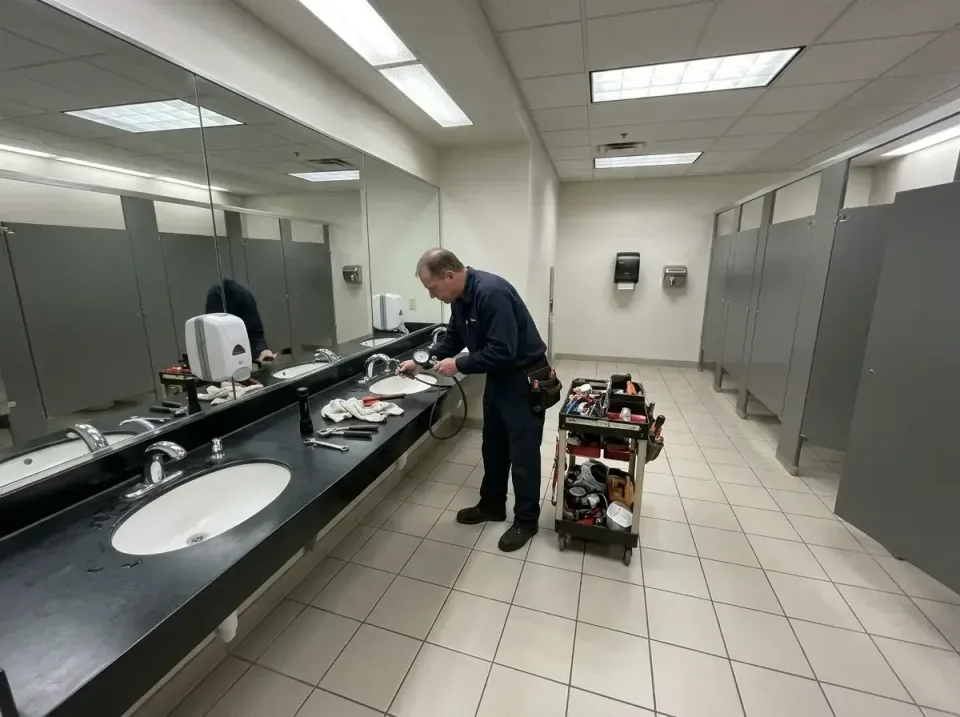
Rinsing a removable aerator is a reasonable homeowner check. Call a professional if multiple hot taps are weak, the delay is worsening, a valve will not move freely, or you see a leak.
Locate the main shutoff before an appointment so you can point it out quickly if water needs to be isolated. Emergency service scheduling is best handled by describing whether the issue affects one faucet or the whole home, and whether there is active leakage or no hot flow.
A shower that turns weak only when another fixture runs may indicate a wider supply issue rather than a single hot-water branch. We can test the system and explain the findings before work starts. For related symptoms, see our guides to pressure that drops during laundry and water pressure testing for hidden restrictions.
What should a hot-water pressure check include?
A useful check compares hot and cold flow at more than one fixture, then examines accessible valves, the faucet aerator, and the route from heater to tap. We note whether the symptom appears immediately or only after another fixture opens. That distinction helps separate a local clog from a supply problem affecting several rooms.
Do not adjust pump or pressure controls based on a single faucet symptom. In West Virginia, hilly terrain and varied property layouts can make access to plumbing equipment less straightforward, so clear access helps the technician inspect safely. Our crew has served the state for more than 10 years; we test first, explain the likely cause plainly, and confirm the repair scope before beginning.
Which check helps explain a slow hot-water tap?
If one bathroom faucet takes longer to produce hot water but other taps behave normally, begin with the fixture rather than assuming the entire home needs a pressure change. The right option depends on whether the trouble is isolated, shared, or tied to a well system.
| Option | Best for | Key detail |
|---|---|---|
| Fixture-level check | One slow faucet | Clean a removable aerator and compare hot with cold flow |
| Single-faucet repair | One persistently weak tap | Inspect its shutoff, cartridge, and accessible connection |
| Whole-house pressure repair | Several affected fixtures | Compare conditions at multiple taps before choosing a repair |
| Well-system inspection | Home supplied by a private well | Check pump and tank operation alongside fixture symptoms |
Seasonal temperature changes can alter water demand, so note whether the delay changes as household use shifts. Near Cass Scenic Railroad State Park, we would still diagnose the plumbing from measured symptoms; a landmark does not determine the cause. Ask what was tested and which finding supports the proposed repair.
How to prepare for a hot-water tap inspection
-
Identify the affected fixtures: Note which hot taps are slow and whether their cold sides run normally; this narrows the inspection before tools come out.
-
Record the pattern: Write down how long the delay seems to last and whether it changes after another tap or shower runs.
-
Clear the work area: Move stored items away from the heater, accessible valves, and nearby piping so the technician can inspect connections safely.
-
Show the main shutoff: Point out its location before work begins, especially if a valve may need isolation.
-
Describe recent changes: Mention new leaks, repairs, or changes in water appearance; heavy rain can raise sediment in private wells, which may be relevant to a change in flow.
-
Ask for the findings: A Charleston plumber should explain what was checked and confirm the scope before making repairs. If you live near Heritage Farm Museum and Village or use Morgantown Personal Rapid Transit, those names can help describe your general location when arranging service.
Get help tracing a slow hot-water tap
A longer wait at the hot tap can be normal when the heater is far away, but weak or newly changed flow may point to a clogged aerator, valve, or hot-water line. If a faucet barely fills a pot or the delay affects several rooms, note which fixtures are involved and arrange a closer look.
Drought periods can reduce private well yield, so a well-fed home with changing flow may need its water supply considered as part of the diagnosis. Flash flooding can affect low-lying properties; after flooding, report any change in water service rather than assuming a faucet is the only issue.
Freeze-thaw cycles can also stress exposed pipes and foundations. Contact West Virginia Plumbing Pros to test the system and review practical options. Request Low Hot Water Pressure Repair.