Why Does Laundry Lower Water Pressure in West Virginia?
When pressure drops during laundry, check whether other fixtures weaken at the same time and whether the problem happens on every wash. A washer filling while a shower or upstairs tap is running can reveal a supply limitation that stays hidden during lighter use.
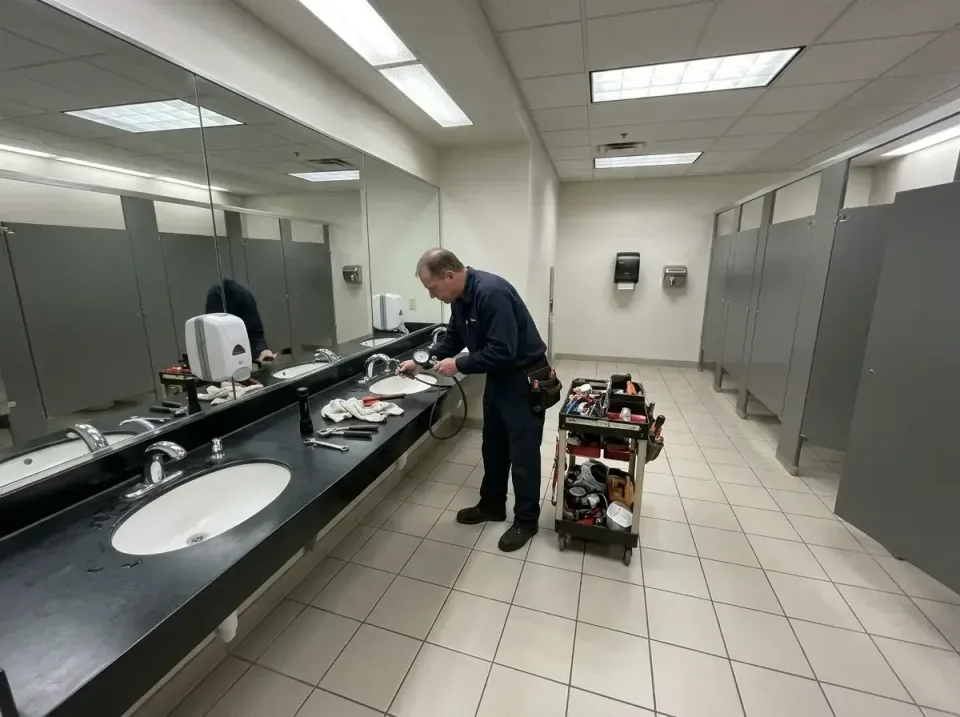
Start with the simple checks; do not adjust well controls or a regulator blindly. Our crew tests the system under flow and compares readings with fixtures closed, so the repair follows evidence rather than a guess.
Around Charleston Town Center, older plumbing can make a simultaneous-use problem especially noticeable; residents should note which fixtures are affected before arranging an inspection. Homes near Cass Scenic Railroad State Park and Coopers Rock State Forest also remind us that service visits can involve very different property access and equipment layouts across West Virginia.
Does the Pressure Drop Affect Other Fixtures?
If the washer fills and the kitchen faucet barely flows or upstairs taps fade, the issue may involve the shared supply rather than the washer alone. Run one tap while the washer is filling, then try a second fixture and note whether the change is immediate, gradual, or limited to hot or cold water.
Those observations help narrow the search. A single weak fixture points toward a local restriction; several weak fixtures suggest a broader pressure or flow problem.
We see homeowners skip this comparison and replace a washer valve before checking whether the rest of the house shows the same pattern. Record the affected rooms and cycle stage.
Is a Washer Hose or Valve Restricting Flow?
Inspect the visible hoses for sharp bends, crushing, leaks, or a partly closed shutoff valve. Do not force an old valve; a corroded handle can break or begin leaking when moved.
Check whether the loss occurs only as the washer fills or continues through the cycle. If the washer is the only appliance affected, its hose screen or supply connection may be obstructed.
If multiple taps weaken too, a hose is less likely to explain the whole symptom. In West Virginia homes near Haddad Riverfront Park, we still start with the same practical test: compare the washer’s fill period with another fixture, then investigate the shared plumbing if both lose flow.
Autumn temperature swings increase freeze-prevention needs, so keep exposed lines protected and note any seasonal change in symptoms.
When Should You Stop DIY Checks?
You can safely observe fixtures and look for visible hose damage, but stop if you find leaking, a stuck shutoff, or pressure loss throughout the home. Never open electrical well-pump controls or alter pressure settings as a troubleshooting shortcut.
Heavy rain can raise sediment in private wells; if a well-supplied home develops a new flow problem after wet weather, mention the timing rather than assuming the washer caused it. Our testing compares pressure while fixtures are closed and while water flows, helping distinguish a general supply issue from a localized restriction.
Mountain elevations often receive heavier snowfall, which can complicate access to exposed equipment; tell the technician where the well or service entry is located.
How Can You Tell a Well-System Problem?
A well pump that runs unusually often, or pressure that falls and recovers while the washer fills, deserves a closer look at the pump system. Do not adjust the pressure switch or tank without the proper procedure; incorrect settings can worsen cycling or leave the home with unreliable flow.
If a property near Canaan Valley Resort State Park has a private well, access and system layout are useful details to share when scheduling. We inspect the pressure behavior and equipment before explaining options.
For a broader look at related symptoms, read Why a Well Pump Cycles Every Minute and What the Pressure Tank Does or How Water Pressure Testing Helps Find a Hidden Restriction.
Which Pressure Check Fits Laundry-Related Pressure Loss?
The right option depends on whether the loss appears at one fixture, across the home, or only on a private well. Compare the symptom before choosing a repair path.
| Option | Best for | Key detail |
|---|---|---|
| Single-fixture check | Washer or one tap loses flow | Compare the affected fixture with others during filling. |
| Whole-house pressure check | Several rooms weaken together | A gauge reading can be taken across a stated 0–200 psi range. |
| Regulator inspection | City-supplied home with broad pressure changes | A regulator controls incoming pressure; valve size affects replacement work. |
| Well-system inspection | Pressure falls and pump behavior changes | Switch settings may be 20/40 or 30/50 psi. |
Cold winters bring frozen-pipe calls, so do not ignore a new restriction after a freeze. Drought periods can reduce private well yield; tell the technician if the loss coincides with lower well output.
Low-lying properties can be affected by flash flooding, so report water intrusion near service equipment. Near the Beckley Exhibition Coal Mine, that detail may help separate an indoor symptom from a site condition.
How Do You Prepare for a Laundry Pressure Check?
If pressure fades only while the washer fills, note which taps change and whether the problem affects hot water, cold water, or both. That record is more useful than changing settings first.
-
Track the symptom: Note the wash cycle stage and whether other fixtures weaken at the same time.
-
Identify affected fixtures: List the rooms and taps that lose flow so the inspection can compare them.
-
Clear the work area: Make the regulator or well pressure tank accessible, and locate the main shutoff.
-
Share well details: Confirm where the pump equipment is and provide safe access; summer thunderstorms can interrupt power to well pumps, so mention any outage connected to the pressure change.
-
Leave controls alone: Do not open or adjust pump controls yourself; Green Bank Observatory is a useful reminder that remote-area properties may require clear directions to equipment.
-
Plan for exposed plumbing: Freeze-thaw cycles stress exposed plumbing and foundations, so point out any visible exterior line damage; properties near Blennerhassett Island Historical State Park should also note equipment access constraints when arranging a visit.
Ask what readings will be taken and whether water may be shut off during repairs.
Ready to Get Help With Laundry Pressure Loss?
If pressure dips only while the washer fills, compare nearby fixtures before deciding the appliance is at fault. Static and flowing readings tell different parts of the story, and a technician can test both before recommending work.
Summer humidity contributes to basement condensation, so look for moisture separately rather than treating dampness as proof of a water-line leak. In valley locations, temperature inversions can affect local weather patterns, but they do not identify the plumbing cause; symptoms and test results should guide the diagnosis.
Residents visiting New River Gorge National Park and Preserve know the region spans varied settings, and home systems can differ just as much. For a measured diagnosis, contact West Virginia Plumbing Pros at (877) 773-0781 or review our Water Pressure Testing service.